
There was a time when multiplayer games were something you simply played because you fancied a few matches.
You logged on, joined a lobby, won some, lost some, blamed lag, questioned the matchmaking, and eventually went to bed. If you enjoyed the game, you came back. If you did not, you played something else.
Now, a lot of multiplayer games come with a calendar.
There are daily challenges, weekly objectives, seasonal rewards, premium tracks, XP boosts, limited-time events, cosmetic bundles and countdown timers. Somewhere in the middle of all that, there is still usually a good game. The problem is that getting to the fun can start to feel like working through a checklist.
So, are battle passes making multiplayer games feel like chores?
The Battle Pass Makes Sense On Paper
The idea behind a battle pass is not terrible.
Instead of old-fashioned map packs that split the player base, many modern multiplayer games make new maps, weapons or modes available to everyone, while charging for optional cosmetic rewards. In theory, that is fairer. Players who want extra skins, emotes or outfits can pay for them, while everyone else can keep playing.
A battle pass also gives regular players something to work towards. If you are already putting hours into a game, it can be satisfying to unlock rewards along the way. Progression has always been part of multiplayer gaming, and battle passes are a structured version of that.
The issue is not always the concept. It is the pressure that comes with it.
Games Now Compete For Your Routine
The modern battle pass is not just selling rewards. It is trying to become part of your routine.
That is where things get tiring. Multiplayer games no longer simply ask whether you want to play. They ask whether you have done your dailies. They ask whether you have finished the weekly challenge. They remind you that the season ends soon. They show you what you nearly unlocked.
For players with loads of free time, this might not be a problem. For adult gamers, it can become exhausting.
After work, family, chores, messages, bills and all the other admin of being alive, the last thing many people want is another set of tasks waiting inside a game. “Play three matches using a weapon you do not like” is not always entertainment. Sometimes it is homework with better graphics.
Fear Of Missing Out Does A Lot Of The Work
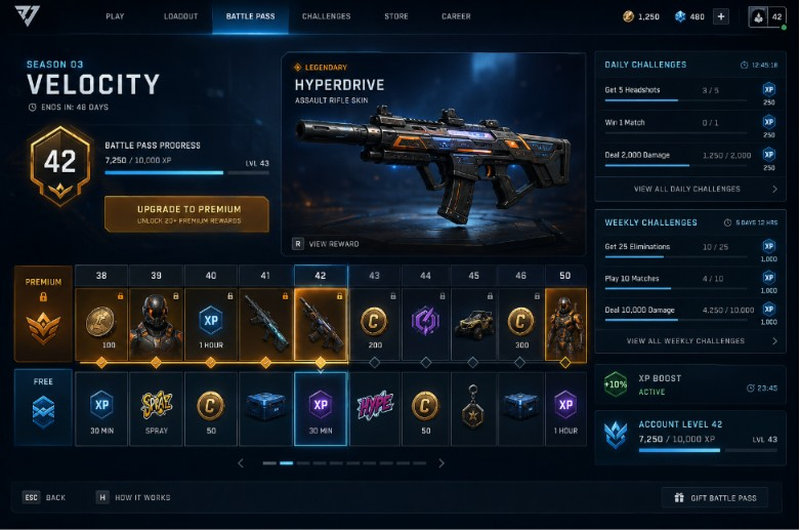
Battle passes lean heavily on the fear of missing out.
That limited-time skin might not return. That event reward is only available this week. That season ends in 12 days. That premium pass you paid for still has 40 levels left, and suddenly you are playing not because you feel like it, but because you do not want to waste the money.
This is where the mood changes.
A game should make you want to play. A battle pass can make you feel like you have to play. Once you are logging in mainly to avoid missing out, the game has started to borrow from the logic of work, subscriptions and loyalty schemes.
Nobody wants their evening entertainment to feel like renewing car insurance.
Not All Progression Is Bad
To be fair, progression can be brilliant.
Unlocking gear, customising a character, earning cosmetics and seeing numbers go up can all be satisfying. Multiplayer games need goals, especially if players are expected to stick around.
The best battle passes feel like background rewards. You play normally, enjoy yourself, and unlock things naturally. You do not have to study the challenge list before deciding whether tonight is the night you spend two hours chasing shotgun eliminations on a map you hate.
Rewards should support the game, not boss the player around.
The Grind Can Change How People Play
One of the stranger effects of battle passes is that they can push people to play in ways they do not actually enjoy.
If a challenge asks for a certain weapon, mode, character or playstyle, the lobby changes. Suddenly people are not always playing to win, cooperate or have fun. They are trying to complete a task.
It can also make players resent parts of the game they might otherwise ignore. A mode that would be fine occasionally becomes irritating when the pass forces you into it.
When progression starts steering the experience too aggressively, the game can lose its natural flow.
Adult Gamers Are More Selective Now
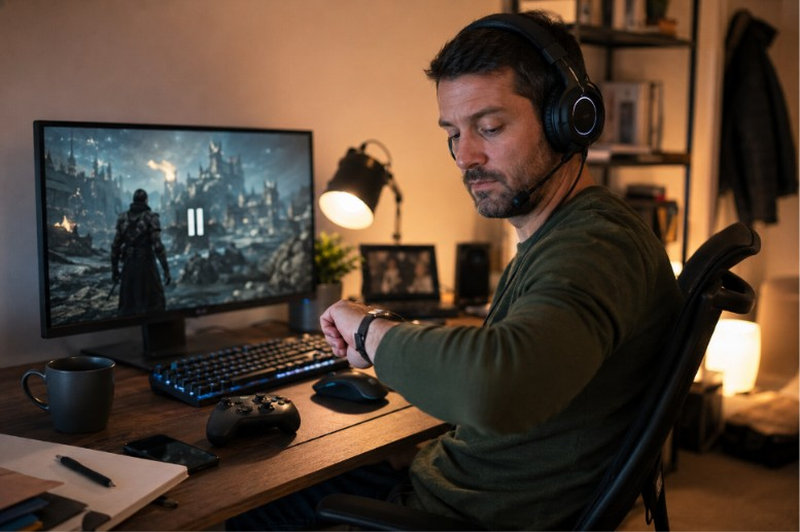
Battle passes can be especially awkward for adult gamers because time is limited.
You might only get a couple of sessions a week. That changes the calculation. If a battle pass expects regular grinding, you either fall behind or spend your precious gaming time chasing objectives instead of playing how you actually want to play.
That is why many players are becoming more selective. They do not reject multiplayer games, but they are less willing to treat them like part-time jobs. A pass has to feel achievable, optional and respectful.
There are too many good games available now to let one multiplayer title own every evening.
The Best Battle Pass Is Easy To Ignore
Battle passes probably are not going anywhere. They are too useful for publishers and too familiar to players. But they do not have to make games worse.
The best version is simple: make the game fun first, then let the rewards sit quietly in the background. Do not punish players for taking breaks. Do not make casual players feel like they are wasting money. Do not turn every session into a list of errands.
A battle pass should be a bonus, not a boss fight.
So yes, battle passes can make multiplayer games feel like chores. Not always, and not automatically, but definitely when they are designed around pressure rather than play.
Multiplayer games are supposed to be something you look forward to. The moment logging in feels like clocking in, something has gone wrong.
